
What Is Messianic Judaism?
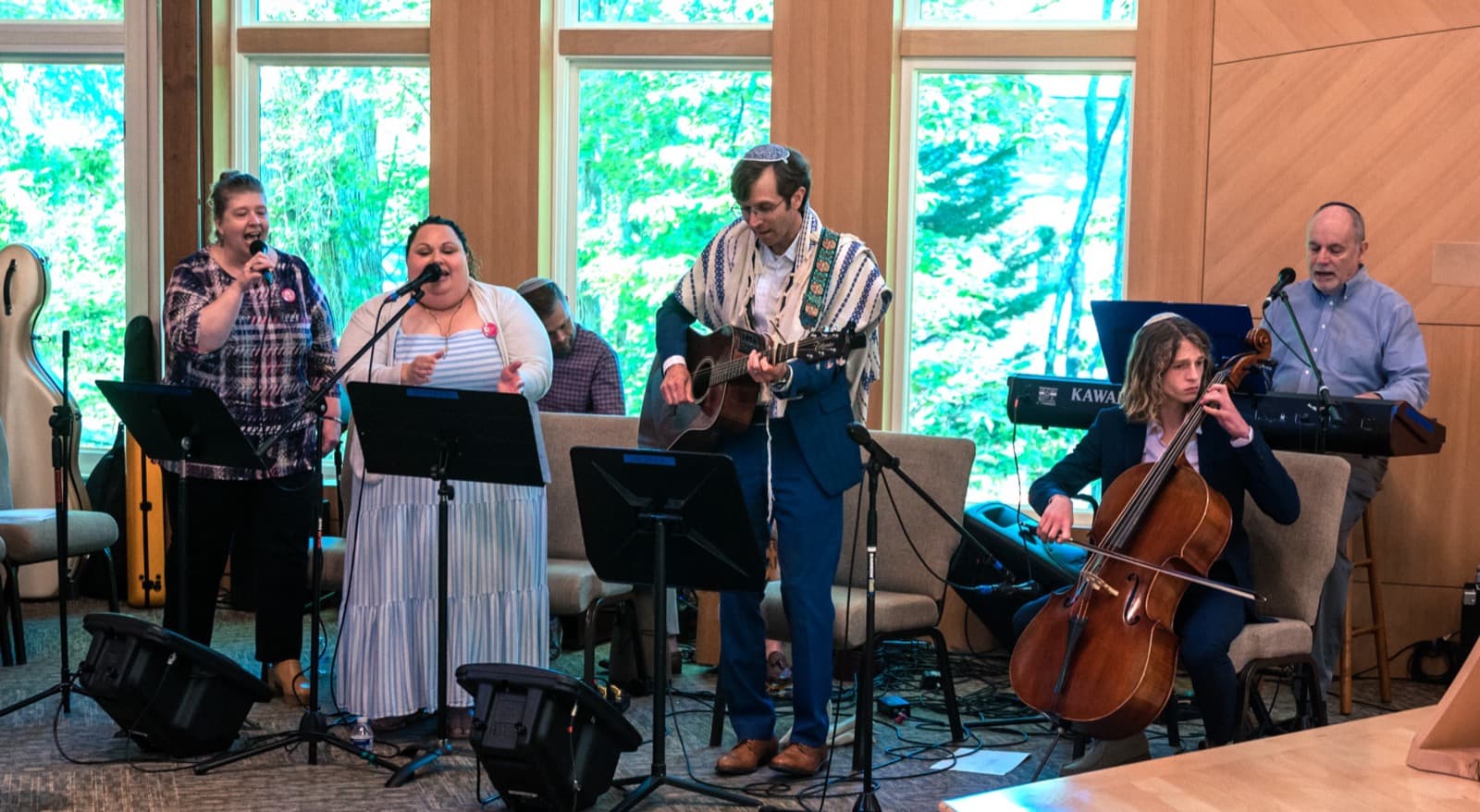
Messianic Judaism is a movement of Jewish believers who affirm Yeshua (Jesus) as Israel's Messiah while continuing to live Jewish life that includes Torah, Shabbat, Hebrew prayer, and Jewish holidays. Together with Gentiles, we worship the God of Israel through our distinct callings. Here is what it looks like on a Saturday morning in Cary, North Carolina.
What Is Messianic Judaism?
Messianic Judaism is a movement of Jewish and Gentile believers who affirm Yeshua (Jesus) as the Messiah promised to Israel, while continuing to live Jewish life: Torah, Shabbat, Hebrew prayer, and the biblical calendar. Messianic Jews do not understand faith in Yeshua as leaving Judaism behind. We understand it as Judaism's own promise arriving—the Messiah of Israel, recognized by Israel.
That makes a Messianic Jewish congregation a synagogue rather than a church. The prayers come from the siddur (the Jewish prayerbook), the week culminates on the seventh day, the Torah scroll is read on the weekly cycle observed in synagogues everywhere, and the year moves through Passover, Shavuot, the High Holidays, and Sukkot. What sets it apart is who stands at the center of all of it.
Core Beliefs of Messianic Judaism
Messianic Judaism affirms the one God of Israel, the Scriptures of Israel, the Messiah of Israel, and the enduring covenantal calling of the Jewish people. Four convictions carry the rest:
Yeshua is Israel's Messiah. Yeshua of Nazareth was born a Jew of a Jewish mother, lived in faithfulness to Torah, died as an atonement for sin, was raised bodily, and reigns as Israel's Messiah with authority over all creation. He is not a departure from Israel's story—he steps into it and embodies it.
All of Scripture is one word. The Tanakh (the Hebrew Scriptures) and the B'rit Chadashah (the New Covenant writings, or New Testament) are read together, each illuminating the other.
Torah is God's gift, not a burden escaped. The Torah is holy, righteous, and good—the constitution of Jewish life. Yeshua bringing Torah to its fullest meaning does not abolish it.
Israel's calling stands. God's choice of the Jewish people is unconditional and irrevocable, and the full restoration of Israel is still ahead.
Our complete statement of faith—eleven affirmations covering God, Israel, Yeshua, Messiah's community, Messianic Jewish life, and the Holy Texts—is on our What We Believe page.
Torah and the New Covenant: Why Messianic Jews Keep Torah
Messianic Jews keep Torah because the New Covenant renews Torah rather than replaces it. This is the hinge of the whole movement, and it is where most misunderstanding starts—so it is worth stating carefully.
Torah, the five books of Moses, is God's covenant gift to Israel: the story of who the Jewish people are and the shape of how they live. The prophet Jeremiah promised a day when God would make a new covenant with the house of Israel and write that same Torah on the heart. Note what the promise does and does not say. The content is unchanged; the location moves. A covenant written inward is Torah kept more deeply, not Torah retired.
So Messianic Judaism reads the Tanakh and the Apostolic Writings as one continuous word, each illuminating the other: Yeshua teaching as a son of Torah, and Torah finding its fullest interpretation in him. He said himself that he came not to abolish but to fill full. Our statement of faith puts it plainly—Yeshua's fulfillment of the Torah does not imply its abrogation, but rather bringing the Torah to its fullest meaning.
This is also why Torah is never framed here as a burden someone escaped. It is holy, righteous, and good, and it is kept with joy. You can hear the method at work in any week's drash, which typically opens the weekly portion closely, works the Hebrew, and traces its themes forward into the Apostolic Writings so the whole of Scripture speaks as one story.
A Brief History: From the First Apostles to the Modern Movement
Messianic Judaism understands itself as the return of something first-century, not the invention of something new. The earliest community of Yeshua's followers was entirely Jewish: they prayed in the Temple, kept Shabbat and the festivals, and read Torah, while proclaiming that the Messiah had come. Partners from among the nations were added to that Jewish community and welcomed without being required to become Jews.
Within a few centuries that Jewish expression of faith in Yeshua had largely disappeared, as the movement became overwhelmingly Gentile and Jewish followers of Yeshua were increasingly expected to leave Jewish life behind in order to belong. For most of the next eighteen hundred years, being Jewish and following Yeshua were treated as mutually exclusive.
The modern movement re-emerged in the 1960s and 1970s, when a generation of Jewish believers—many of them shaped by the era's broader religious awakening, and given public visibility by organizations such as Jews for Jesus—declined to assimilate and began forming Jewish congregations instead. Bodies like the Messianic Jewish Alliance of America (MJAA) and the Union of Messianic Jewish Congregations (UMJC), founded in 1979, gave the movement structure, congregational standards, and rabbinical training.
Sha'arei Shalom is part of that story. We began in the summer of 2000 in a Cary living room, held our first public Shabbat services in September 2001, affiliated with the UMJC in those early years, and bought our property on Old Apex Road in 2008. Our full history is here.
Is Messianic Judaism Jewish? How Mainstream Judaism Views It
Messianic Jews understand themselves as Jews, and mainstream Jewish denominations do not. Both halves of that sentence are true, and a page like this one is not worth much if it only prints the first half.
Orthodox, Conservative, Reform, and Reconstructionist Judaism all hold that affirming Yeshua as Messiah places a person outside Judaism. Most major Jewish organizations describe Messianic Judaism as a form of Christianity. Israel's courts have ruled that Messianic Jews cannot claim Jewish status under the Law of Return. None of that is a misunderstanding to be argued away; it is a considered position held by our neighbors, and we do not dispute their right to define the boundaries of their own communities.
What we hold with our entire lives, is this: a Jew who recognizes Israel's Messiah has not stopped being a Jew. So Messianic Jewish families keep Shabbat, read the parashah, fast on Yom Kippur, build a sukkah, mark b'nai mitzvah, and raise children who know they are Jewish. Identity precedes conviction, and it is not surrendered by it.
We say this without any interest in argument. Our regard for the wider Jewish community is real, and standing with the Jewish people—ahavat Yisrael—is one of the seven pillars our community is organized around.
Messianic Judaism vs. Christianity: Key Differences
Messianic Judaism and Christianity share the central conviction that Yeshua is the Messiah, risen from the dead—the difference is the form that faith takes. Christianity expresses it through church tradition; Messianic Judaism expresses it through Jewish life. As our rabbi puts it: Messianic Judaism is not Christianity with Jewish sprinkles.
| Messianic Judaism | Christianity | |
|---|---|---|
| Day of worship | Shabbat—Friday sundown to Saturday nightfall. The main service is Shabbat morning. | Sunday, the first day of the week. |
| Order of worship | Jewish liturgy from the siddur (prayerbook): Morning Blessings, the Shema, the Amidah, and a Torah service. | Varies widely by tradition; typically songs, prayer, and a sermon. |
| Scripture reading | The weekly parashah—the same Torah portion read in synagogues worldwide—read from a Torah scroll, with the Apostolic Writings alongside it. | A lectionary or a preacher's chosen text, usually weighted toward the New Testament. |
| Calendar | The biblical and Jewish calendar: Passover, Shavuot, Rosh Hashanah, Yom Kippur, Sukkot, Chanukah, Purim. | The church year: Advent, Christmas, Lent, Easter, Pentecost. |
| Torah observance | Torah is Israel's covenantal calling, kept with joy—Shabbat, festivals, dietary practice, lifecycle. | Generally understood as fulfilled in Messiah and not binding on believers. |
| Jewish identity | Jewish members remain visibly, covenantally Jewish, and raise Jewish children. | Jewish believers typically assimilate into a non-Jewish congregational culture. |
None of this is said against the church. Christian faithfulness has carried the good news of Israel's Messiah across the world for two thousand years, and Christian friends are among our closest partners. The contrast above is a description of what we are, not a verdict on anyone else.
Shabbat, the Parashah, and Jewish Holid
Messianic Jewish practice runs on Jewish time. Shabbat—the seventh day, set apart from creation itself—begins Friday at sundown and ends Saturday at nightfall, and the community gathers on Shabbat morning for the main service of the week. Ceasing from work one day in seven is both obedience and gift: a weekly reminder that the world rests in God's hands and not in ours.
Torah is read on the annual cycle, one parashah each week, the same portion opened in synagogues around the world that Shabbat. That shared rhythm anchors teaching, study, and family life, and it ties a congregation in Cary to the whole Jewish people. You can read this week's parashah or listen to any recent drash to see how it works in practice.
The year moves through Jewish holidays: Passover, Shavuot, Rosh Hashanah, Yom Kippur, Sukkot, Hanukkah, and Purim. For Messianic Jews these are not history lessons and not illustrations borrowed for a sermon—they are the Jewish holidays of Israel, and each one also opens onto Yeshua, from the Passover lamb to the fall festivals' hope of his return. Lifecycle moments follow the same pattern: baby dedications, b'nai mitzvah, weddings, and mourning are all marked Jewishly.
Jewish and Gentile Identity in Messiah
In Messiah, Jew and Gentile are fully reconciled and fully at home together—and remain who they are. That single sentence answers the question sitting under most of this page: how do Jews and non-Jews belong to the same community without erasing the distinction between them? Scripture's answer is neither separation nor sameness. Israel's calling is not dissolved, and the nations are not converted into Jews.
One distinction matters here, and Messianic Judaism takes it seriously. Torah is Israel's covenantal calling. We do not teach that Gentile believers are obligated to take on Jewish practice—the position sometimes called “one-law” theology is not ours. Friends and allies from the nations are beloved partners, welcomed fully into worship and community life, never pressured to live as Jews. Many find deep nourishment in Jewish life and practice, and receive it as gift rather than obligation.
For Jewish members the same distinction runs the other way. Faith in Yeshua is not a departure from Jewish identity but a deepening of it, so Jewish believers remain visibly, covenantally Jewish, and their children inherit that identity as a living thing rather than a memory. That is why lifecycle observance, Hebrew literacy, and a youth track toward b'nai mitzvah are not extras here. They are how a Jewish community stays Jewish in the next generation.
Jewish Prayer and the Siddur
Jewish worship is liturgical: it moves through an ordered service of prayers, blessings, and Scripture gathered in the siddur, the Jewish prayerbook. The heart of that order is ancient—the Shema (“Hear, O Israel, the L-rd our God, the L-rd is one”), the Amidah (the standing prayer), the blessings before and after the reading of Torah. These are not performances to watch but prayers to pray, and generations of Jews—including Yeshua and his first followers—prayed them before us.
Praying from the siddur does something spontaneous prayer alone cannot: it joins one congregation to the whole Jewish people, across the world and across the centuries, praying largely the same words at the same moments. And for Messianic Jews the liturgy keeps redmining us of Yeshua—the hope of our redemption, the coming Kingdom, the faithfulness of God to Israel—so that the oldest prayers become confession of the Messiah already standing at their center.
Liturgy has a learning curve, and no one is expected to arrive knowing it. Prayers are sung and spoken in Hebrew and English, and everything is presented so a first-time guest can follow along and join in as much, or as little, as they are ready for.
What Happens at a Messianic Synagogue Service
A Messianic synagogue service follows the historic order of Jewish prayer, with Yeshua confessed at the center of it. At Sha'arei Shalom, Shabbat morning at 10:00 AM moves through the Morning Blessings, the Shema (“Hear, O Israel”), the Amidah (the standing prayer), a Torah service in which the scroll is carried through the congregation and the weekly parashah is read, and a drash—a message working the portion closely and tracing it into the Apostolic Writings.
Prayers and songs are led in Hebrew and English and projected with transliteration, so a guest who has never seen a siddur can follow every line. Worship is live and full—voices, instruments, and, on festivals, dance. Nothing is performance; the liturgy is meant to be prayed, not watched.
Afterward everyone stays for oneg: food, coffee, and unhurried conversation. Participate as much, or as little, as you feel comfortable. There is no expectation placed on a visitor beyond being present. More about our Shabbat services covers what to wear, where to park, and what happens with children during the service.
Who Belongs to Messianic Judaism Today
A Messianic Jewish congregation is typically mixed: Jewish members together with families and friends, along with Gentiles from the nations who have found their spiritual home in Jewish life centered on Yeshua. Estimates of the movement's worldwide size vary widely and none are authoritative, but congregations exist across North America, Israel, Europe, and Latin America.
Most congregations affiliate with a wider body. The Union of Messianic Jewish Congregations (UMJC) and the Messianic Jewish Alliance of America (MJAA) are the two largest in North America, providing shared theological standards, rabbinical ordination, and mutual accountability between congregations. Sha'arei Shalom has been a UMJC member congregation since our founding, and our congregational leader, Rabbi Jeffrey D. Lerman, was ordained within that tradition.
Belonging looks ordinary from the inside: children in Jr. Shabbat and Dorot, adults in Hebrew classes and Scripture studies, meals delivered when someone is sick, a sukkah raised every fall. A movement is an abstraction. A congregation is a group of people who keep showing up for each other.
Visiting Congregation Sha'arei Shalom
If you have read this far, the next step is visit our community. We gather at 700 Old Apex Road in Cary, North Carolina, Saturdays at 10:00 AM, and first-time guests join us nearly every week—Jewish visitors curious about a Messianic synagogue, Christians who have never seen a Torah service, and people who simply want to understand what Messianic Judaism looks like in practice.
Come as you are. Dress is casual, greeters will help you find your way, and no one will ask anything of you. Everyone is welcome.
Messianic Judaism: Frequently Asked Questions
What is Messianic Judaism?
Messianic Judaism is a movement of Jewish and Gentile believers who affirm Yeshua (Jesus) as the Messiah promised to Israel while continuing to live Jewish life—Torah, Shabbat, Hebrew prayer, and the biblical calendar. Messianic Jewish congregations worship as synagogues, not as churches. Faith in Yeshua is understood not as a departure from Jewish identity but as its fulfillment.
Is Messianic Judaism Jewish?
Messianic Jews understand themselves as Jews who have found Israel's Messiah, and Messianic Judaism keeps the covenantal responsibilities of Jewish life—Torah, Shabbat, the festivals, and the Jewish people's ongoing calling. Mainstream Jewish denominations do not recognize the movement as a form of Judaism, and we state that plainly rather than obscure it. We hold our conviction with respect for those who disagree.
What are the beliefs of Messianic Judaism?
Messianic Judaism affirms the one God of Israel; the Tanakh (Hebrew Scriptures) and the B'rit Chadashah (New Covenant Scriptures) as God's inspired word; Yeshua as Israel's Messiah, crucified, risen, and returning; the Torah as God's enduring gift to the Jewish people; and God's irrevocable choice of the Jewish people. Our full statement of faith is on our What We Believe page.
What is the difference between Messianic Judaism and Christianity?
Both affirm Yeshua as Messiah, risen from the dead. The difference is the form that faith takes: Messianic Judaism lives it inside Jewish life—Shabbat, the siddur, the Torah service, the biblical calendar, and Jewish identity carried forward into the next generation—rather than inside church tradition. A Messianic synagogue service looks and sounds like a synagogue service.
What do Messianic Jewish congregations believe?
Messianic Jewish congregations are synagogues centered on Yeshua as Israel's Messiah. They hold that Torah remains Israel's covenantal calling, that Gentile believers are full partners without being obligated to Jewish practice, and that Jewish identity is to be preserved rather than dissolved. Congregations in the Union of Messianic Jewish Congregations (UMJC), including Sha'arei Shalom, share standards for theology, leadership, and mutual accountability.
How do major Jewish denominations view Messianic Judaism?
Orthodox, Conservative, Reform, and Reconstructionist Judaism all hold that belief in Yeshua as Messiah places a person outside Judaism, and none recognize Messianic Judaism as a Jewish movement. Most Jewish organizations regard it as a form of Christianity. We do not dispute how our neighbors define their own boundaries, and we continue to live Jewish life as we understand God has called us to.
What happens at a Messianic synagogue service?
A Messianic synagogue service follows the historic order of Jewish prayer: Morning Blessings, the Shema, the Amidah (the standing prayer), a Torah service with readings from the weekly parashah, and a drash (message) that connects the portion to the Apostolic Writings. At Sha'arei Shalom, prayers and songs are projected in Hebrew, English, and transliteration so a first-time guest can follow along, and the service is followed by oneg—food and unhurried conversation.
Who is Yeshua?
Yeshua of Nazareth is a son of Israel: born of a Jewish mother into the family of Abraham, Isaac, and Jacob, circumcised on the eighth day, and faithful to the Torah and the covenant throughout his life. We believe he is the Messiah promised through Israel's prophets, and that in him Israel's own calling is gathered up and fulfilled. In his death he shared Israel's suffering and made atonement for Israel and the nations. In his bodily resurrection, God gave the pledge of Israel's final redemption and the life of the world to come. Raised and exalted, he remains a Jew, bound to his people whether or not they yet recognize him. He reigns now as Israel's Messiah and Lord of all creation, and he will return to Jerusalem to complete the restoration of Israel and the renewal of the world.
What is a siddur?
The siddur is the Jewish prayerbook—a collection of prayers, blessings, and Scripture arranged for daily, Shabbat, and festival worship, drawn from the Bible and refined across many centuries. Praying from the siddur joins a congregation to Jewish communities around the world and across generations, praying largely the same words Yeshua and his first followers would have known.
Do non-Jews have to keep Torah or convert to participate?
No. Torah is Israel's covenantal calling, and Messianic Judaism does not teach that non-Jews are obligated to take on Jewish practice—that view, sometimes called 'one-law' theology, is not what we hold. Friends and allies from the nations are beloved partners in our community, welcomed fully as they are and never pressured toward Jewish obligation.
Can I visit if I'm not Jewish, or just curious?
Yes. Our community is made up of devoted Jews together with families, friends, and allies from many backgrounds, and first-time visitors join us nearly every week. Come as you are; dress is casual, greeters will help you find your way, and nothing is asked of you beyond being present.
Come and see for yourself
Messianic Judaism is easier to understand from inside a room than from inside an article. Spend a Shabbat with us, stay for oneg, ask the rabbi anything. The gates are open.
Contact us and we'll be glad to talk.